
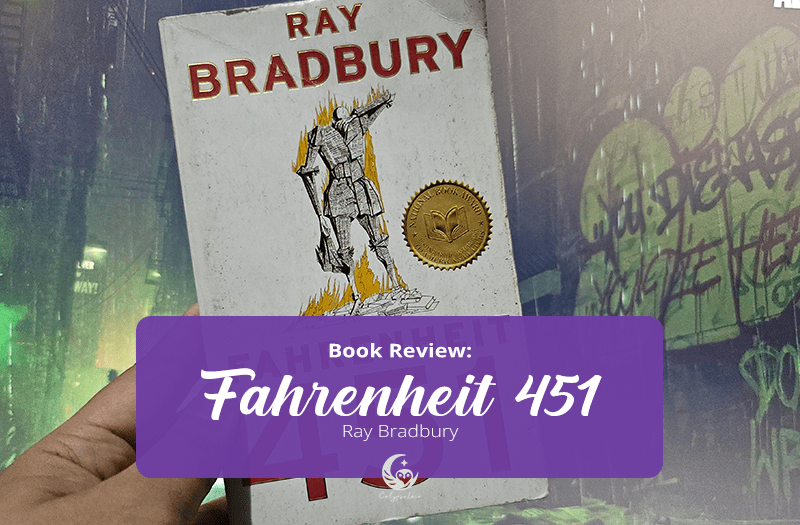
There are books that you read, and then there are books that read you. Ray Bradbury’s Fahrenheit 451 seem to sit in that strange, unsettling territory. Something that manages to ignite something bigger within you. As if there’s a faint voice in your ear, whispering “Does this feel familiar?”
📖 Fahrenheit 451
Author: Ray Bradbury
Series: N/A
Book No.: Standalone
Published: 1953
Pages: 158
Status: Completed
Genre: Dystopian, Science Fiction
When I decided to buy this book earlier this year, I did it simply out of curiosity. I’ve been hearing a lot of things about this book from my friends. Given that I needed to jumpstart myself into reading again, I didn’t realize how this book with less than 200 pages will leave me thinking after.
Bradbury wrote a story where books are banned, firemen don’t save but burn, and people are numbed into obedience by fast distractions and shallow pleasures. And reading this in 2025? This feels a little familiar, isn’t it?
The story began with these words:
It was a pleasure to burn.
And those words alone had given me an imagery of not just a small fire, but a blazing one. The kind of fire that ruin everything it tends to kiss. There’s no doubt that fire is the central image of it all. It is violent, consuming and absolute.
A World of Fire and Silence
The book starts with Guy Montag, our protagonist, who is a fireman. And you’d think it’s the kind of job that saves people but no. In this dystopian novel, a fireman’s job is to set things on fire. And Guy? He takes pride in setting books aflame. Watta guy, am I right? (hehe)
However, upon meeting Clarisse, his neighbor who keeps on asking and asking questions whenever they meet, he slowly becomes curious of his job and slowly, he begins to question things. Why are books so dangerous? What is it about words, ideas, and stories that are so forbidden that it makes them all worth…burning?
Bradbury’s world is frightening not because it’s fantastical in anyway but it’s possible. With the recent events happening left and right, it’s not hard to see how such a world can be a reality. The citizens in this book? They aren’t exactly mindless due to dictatorship alone, they’ve surrendered themselves for convenience.
Reading about Montag’s world feels like I was staring straight into ours. The “parlor walls” which are the giant TV screens seem to dominate households, while the shallow chatter had replaced real conversations.
The Weight It Carries
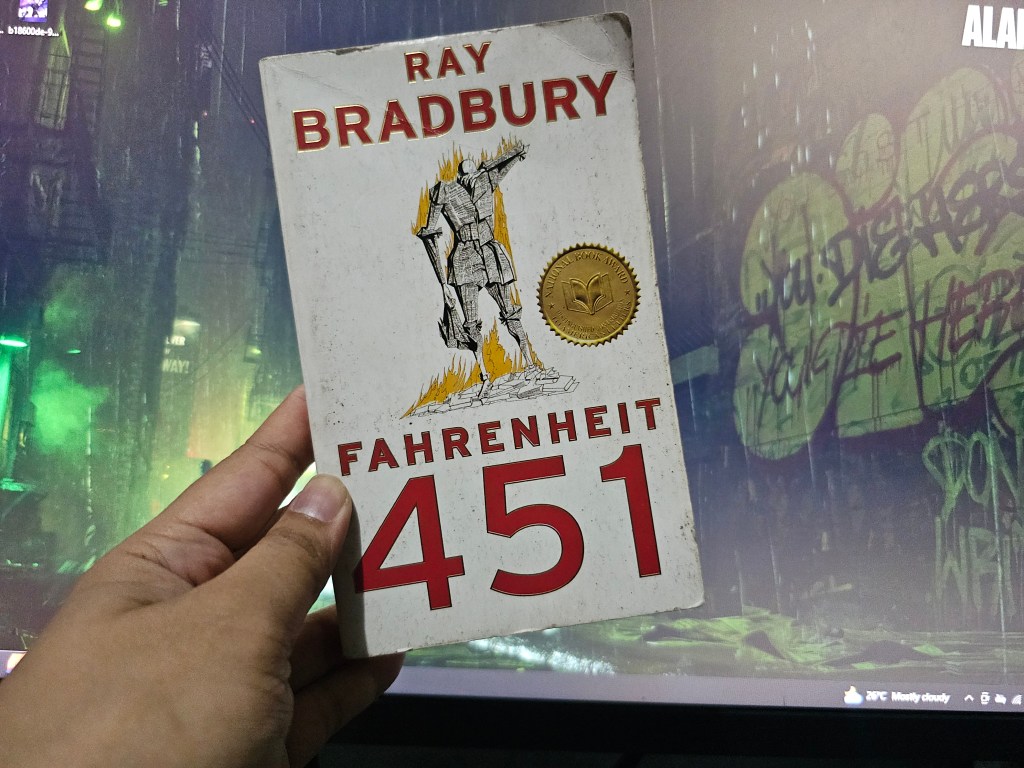
What I find interesting the most about Fahrenheit 451 is how poetic it is. Though this is my first book written by this author, Bradbury doesn’t seem to write like a typical dystopian author who builds systems and rules. The way he writes is like he’s a dreamer, who paints with flames. His language crackles with metaphor that is almost hypnotic in places; the more you read, the deeper this book pulls you in. Bradbury’s style doesn’t just let you see the fire in his writing. At some point, you feel it licking at your imagination.
Despite it being a short book with under 200 pages, the message it leaves lingers. Some books are heavy because of their size. But this one? It’s heavy from the questions it tends to leave in its wake. What are we consuming? What are we giving up without realizing it? And like Guy Montag, are we capable of waking up before everything turns to ash?
Why This Book Still Matters
Bradbury wasn’t just writing about censorship. He was writing about apathy. That quiet decision to stop thinking deeply, to stop questioning and to stop seeking. Funny enough, despite this book being published long ago, it doesn’t seem like this message aged a day. If anything, it feels sharper now, when our attention span has shortened every second and is constantly being pulled in a thousand directions almost all at once.
Reading Fahrenheit 451 in 2025 wasn’t just an exercise in literary history. It tells you to turn off the noise and pick up something with a definite weight. The message it carries gives you an invitation to sit, pause and think. More importantly, always stay curious and seek answers without losing them against a wave of immediate convenience.
Verdict
If you’re looking for something short for a dystopian novel that’s not only classic but also uncomfortably relevant from today, you should put Fahrenheit 451 on your list. It’s not a heavy time commitment, but it recently packs a punch while carrying something much, much bigger.
🔮 Core Rating: 🔮🔮🔮🔮 (Radiant Orb) – A blazing, unforgettable classic.
Final Thoughts
After reading, I was at a loss for words. My brain feels singed but it surely set a fire to my thoughts. Some books entertain, some inform while some unsettle. Fahrenheit 451 does all three of them. It’s a reminder that stories aren’t just words on a page as they can be matches. And once lighted, they can burn far beyond their covers.
“Ideas—written ideas—are special. They are the way we transmit our stories and our thoughts from one generation to the next. If we lose them, we lose our shared history. We lose much of what makes us human. And fiction gives us empathy: it puts us inside the minds of other people, gives us the gift of seeing the world through their eyes. Fiction is a lie that tells us the true things, over and over.”



 CalypsoLair Chronicles
Leave a comment